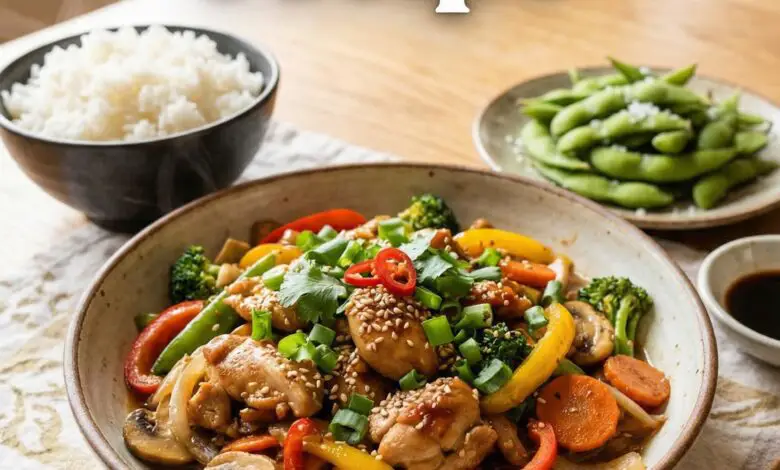
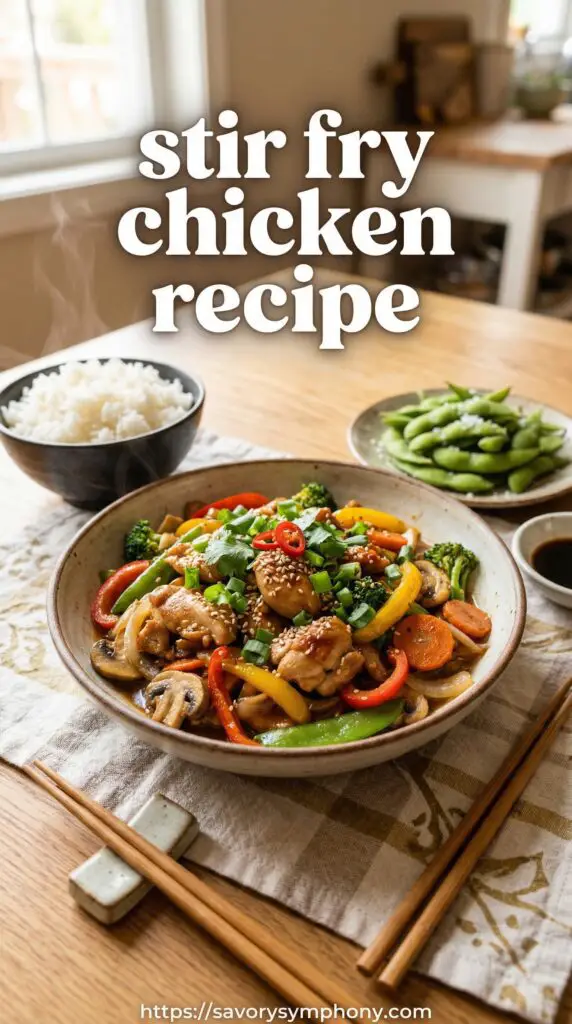
Juicy, flavorful, and packed with 35g of protein — and yes, there are two sneaky restaurant secrets involved.
Okay, Real Talk — Why Does Your Homemade Stir Fry Never Taste Like the Restaurant’s?
You know that feeling when you try to recreate your favorite Chinese takeout at home and it just… doesn’t hit the same? The chicken’s weirdly chewy, the broccoli is somehow both soggy AND undercooked, and the sauce tastes like salty disappointment? Yeah. We’ve all been there.
Here’s the thing though — it’s not you. It’s the recipe. Most homemade stir fry chicken recipes are missing two key tricks that every Chinese restaurant uses without thinking twice: velveting and Shaoxing cooking wine. Sound fancy? Don’t worry — they’re both super easy once you know what they are, and they’ll completely change your stir fry game.
Oh, and did I mention this whole thing comes together in 20 minutes, costs under $2 per serving, and packs in over 35 grams of protein? Yeah, your takeout app is about to collect some serious dust.
The Reason Your Chicken Tastes Like a Rubber Eraser (And How to Fix It)
Let’s start with the biggest stir fry crime out there — tough, dry, sad chicken. If this has happened to you, one of two things went wrong:
- You crowded the pan. We get it, you’re hungry. But piling too much chicken in at once drops the temperature fast, and instead of getting that gorgeous golden sear, you end up basically steaming your chicken. Which is… not the vibe.
- You overcooked it. Chicken breast is lean, which means it has zero chill when it comes to heat. One extra minute and it goes from juicy to “why is this texture happening.”
So What’s the Fix? Meet Velveting.
This is the technique Chinese restaurants use to get that silky, tender chicken that practically melts in your mouth. And the best part? You only need baking soda — yes, the stuff sitting in your pantry right now.
Here’s all you do:
- Slice your chicken breast thin, cutting against the grain.
- Toss it with ½ teaspoon of baking soda per pound of chicken.
- Let it hang out for 15–20 minutes.
- Rinse it really well under cold water, then pat it dry.
That’s it. The baking soda works some science magic on the surface of the meat that keeps the proteins from tightening up too fast when they hit the heat. The result is chicken that stays juicy and tender even if you’re distracted by your phone for an extra minute. (No judgment, we all do it.)
Friendly heads up: This trick works great beyond stir fry too. Try it before making a fajita chicken recipe or even when prepping chicken for a chicken recipe for chicken alfredo — you’ll notice the difference immediately. It’s one of those techniques you’ll use forever once you try it.
The Sauce That Makes Everything Taste Amazing
Okay, let’s talk about the real star of any good stir fry chicken recipe — the sauce. This is where most homemade versions completely fall apart, and honestly, it’s the easiest thing to get right once you know the formula.
The Golden Ratio (Basically Your New Best Friend)
| Flavor | What to Use | How Much (2 servings) |
|---|---|---|
| Salty/Savory | Low-sodium soy sauce | 3 tablespoons |
| Sweet | Honey or maple syrup | 1 tablespoon |
| Aromatic | Fresh garlic + ginger | 2 cloves + 1 tsp grated |
| That “wow” factor | Shaoxing wine | 2 tablespoons |
| Thickener | Cornstarch + cold water | 1 tsp + 2 tbsp |
| Nutty finish | Sesame oil | 1 teaspoon |
Wait, What’s Shaoxing Wine?
So this is the secret weapon that makes your stir fry taste like it came from an actual restaurant kitchen. Shaoxing is a Chinese cooking wine, and it adds this deep, slightly nutty, savory flavor that you just can’t fake with anything else. You can grab a bottle at any Asian grocery store for about $3 — and it’ll last you months.
Can’t use alcohol? No stress — just sub in some dry sherry or a small splash of apple cider vinegar mixed with a little extra broth. Not identical, but still way better than skipping it.
Don’t Make This Salty Mistake
This one’s important, so listen up: do not use regular full-sodium soy sauce AND bouillon together. Trust me on this — the result is so salty it’s basically inedible, and no amount of extra rice will save it. Always go low-sodium soy sauce and low-sodium broth. You can always add more salt; you can’t take it away.
Trying to cut sugar? Blend up a couple of Medjool dates with warm water for a natural sweetener that works surprisingly well. Or just use sugar-free maple syrup — easy swap, no drama.
The Cooking Order That Changes Everything