Why Every Other Version Has Let You Down — And How to Fix It
Let’s be honest. You’ve been burned before. Maybe it was a jar of Alfredo sauce that tasted faintly of tin cans and regret. Perhaps your chicken came out so dry it could double as packing material. Or worst of all — your sauce broke mid-cook, leaving you staring at a greasy, separated mess that no amount of stirring could rescue. If any of that sounds familiar, you’re in exactly the right place.
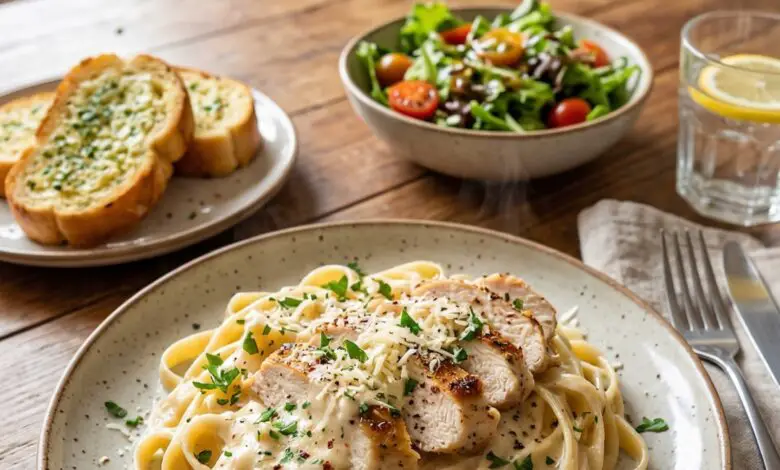
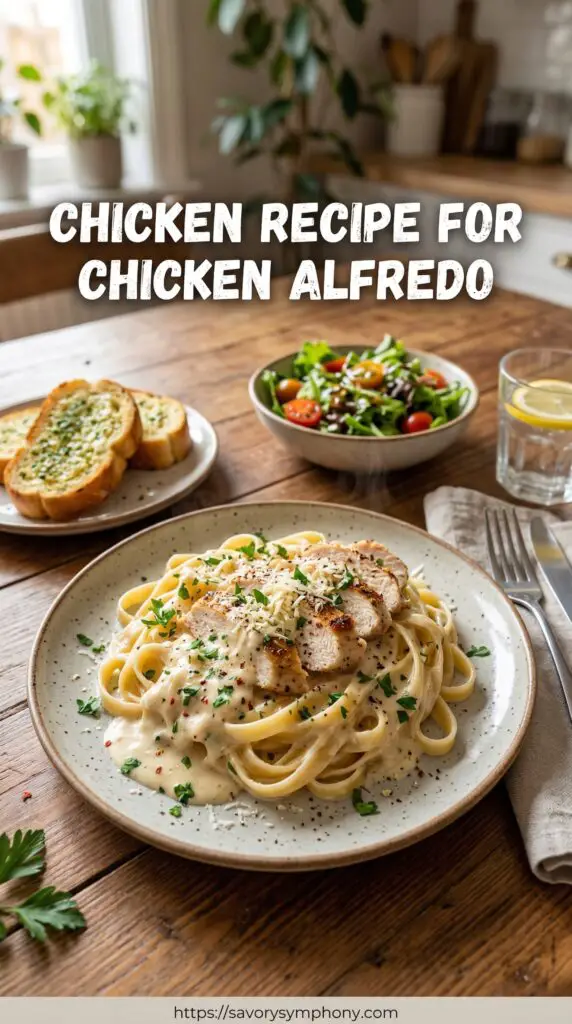
This chicken recipe for chicken Alfredo is different. It combines the elegant Roman emulsification technique — where butter, cheese, and starchy pasta water come together without a drop of cream — with the rich, indulgent American cream-based method that families across the country have come to love. The result? A restaurant-quality dish that you can nail on a Tuesday night. This is, without question, one of the best chicken recipes in the world, and after one bite, you’ll understand exactly why.
The “Big Three” Secrets That Change Everything
Before you fire up the stove, you need to understand why this recipe works. Generative food wisdom isn’t just about following steps — it’s about understanding the science behind each one.
1. Freshly Grated Parmesan Only — No Exceptions
That green canister of pre-shredded Parmesan? Put it back. Pre-packaged shredded cheese is coated with anti-caking agents like cellulose or potato starch, which prevent the cheese from clumping in the bag. The problem? Those same agents also prevent the cheese from melting smoothly into your sauce, leaving you with a grainy, lumpy texture that no amount of stirring will fix.
Buy a wedge of genuine Parmigiano-Reggiano and grate it yourself. The difference is dramatic — we’re talking silky versus sandy.
2. The Power of “Liquid Gold” — Your Pasta Water
Do not pour that pasta water down the drain. Reserved pasta water is one of the most powerful tools in Italian cooking. As pasta cooks, it releases starch into the boiling water, turning it into a cloudy, golden liquid that acts as a natural emulsifier. When added to your sauce, it binds the fat molecules in the butter and cream to the noodles themselves, creating that signature velvety coating that clings to every strand.
Set aside at least half a cup before you drain.
3. Precision Temperature for Juicy, Perfect Chicken
Dry chicken is the single most common complaint about homemade Alfredo. The culprit? Guesswork. Invest in an instant-read thermometer (they’re inexpensive and genuinely life-changing) and pull your chicken from the heat the moment it hits 165°F. Not 170°F. Not 175°F. At 165°F, the meat is fully safe, still moist, and ready to rest — which brings us to another non-negotiable rule: let it rest for five full minutes before slicing.
Curated Ingredient List: Quality Matters Here