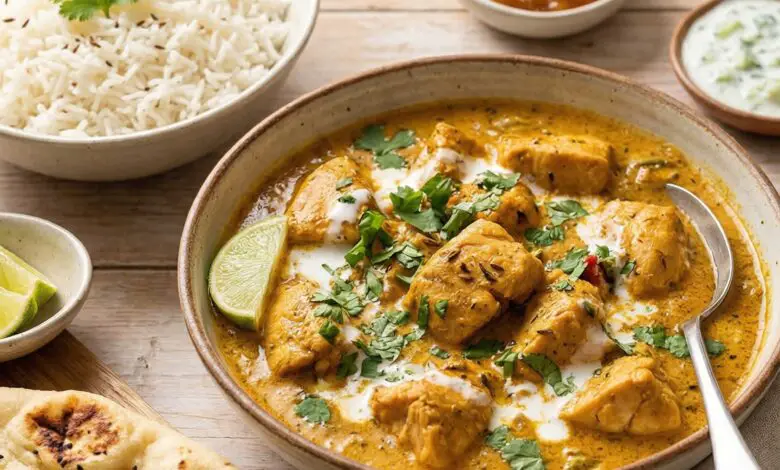
And if you’re having one of those weeks where you just can’t even — grab a high-quality store-bought curry paste. Just bloom it in oil first, and nobody will judge you. Vegetarian? Chickpeas, paneer, or cauliflower all work beautifully as swaps. All tested. All delicious.
How to actually make it (step by step, no stress)
1. Bloom the whole spices
Heat ghee or oil in a wide, heavy pan on medium-high. Toss in the cardamom, cinnamon, cloves, and bay leaf and let them sizzle for about a minute. You’re looking for that fragrant bloom — it smells incredible and means you’re on the right track.
2. Caramelise the onions (don’t skip!)
Add your diced onions and turn the heat to medium. Now just cook them, stirring here and there, for a full 10 minutes until they’re a deep, golden amber. This is non-negotiable. Set a timer if you have to. The sweetness you build here is the whole foundation.
3. Build the masala
Add the garlic, ginger, and green chili. Cook for another 2–3 minutes until everything smells insanely good and there’s no raw bite left. This is your masala — your mother sauce. It should look golden and paste-like.
4. Sear the chicken
Crank the heat back up and sear the chicken pieces, skin-side down, for 3–4 minutes per side. You want a good brown crust. This locks in the juices and adds another whole flavour layer before the braising begins.
5. Bloom the ground spices
Turn the heat back to medium and stir in the turmeric, ground coriander, cumin, and chili powder. Let them bloom in the fat for about 60 seconds — they should sizzle and smell toasty. Then you’re ready for liquid.
6. Braise it low and slow
Pour in the tomato passata and about 200ml of broth or coconut milk. Give it all a good stir, season with salt, bring to a gentle simmer, then cover and let it do its thing for 20–25 minutes. This is your moment to pour a drink.
7. Finish with magic
Take it off the heat. Stir in the Garam Masala and your chosen creamy element. Important: don’t let it come back to a hard boil after adding dairy — just keep it on gentle heat for a couple of minutes max, or the sauce will split on you.
A few tips so it actually turns out perfect
Stop the yogurt from curdling
Let your yogurt sit out and come to room temperature first. Then turn the heat to low and add it in small spoonfuls — not the whole tub at once — stirring as you go. Cold yogurt in a hot pan is the number one way this goes wrong. Slow and steady wins this one.
Dial the heat up or down
Want it spicier? Throw in 1–2 fresh serrano chiles with the garlic, or finish with a pinch of cayenne. Cooking for kids — or making a cosy, crowd-pleasing “marry me chicken recipe” vibe for a dinner party? Cut the chili in half and add more yogurt. The creaminess naturally tames the heat and it ends up tasting indulgent rather than spicy.
Fixing the texture
Too thin? Leave the lid off and simmer for 5–8 more minutes — it’ll reduce down to a glossy, clingy sauce. Too thick? Just splash in a bit of warm water or coconut milk. It loosens back up instantly.
What to eat it with (beyond plain rice)
- Basmati rice — The OG pairing. Fluffy, fragrant, perfect sauce carrier.
- Garlic naan — Warm flatbread for scooping up every last drop.
- Pilau rice — Already spiced — it’s practically a side dish in itself.
- Roti / paratha — Layered, slightly smoky, deeply satisfying.
- Cucumber raita — Cool and creamy — the perfect heat counterbalance.
- Ribbon salad — Sliced cucumber + red onion + lime. Bright and refreshing.
Meal prep? Oh, this one’s made for it
🧊 Fridge
Good for 4 days in an airtight container. And here’s the thing — it genuinely tastes better the next day. The flavours meld overnight into something even richer. Make it on Sunday, eat it better on Monday.
❄️ Freezer
Freezes beautifully for up to 3 months. Portion it out before freezing so you can just grab what you need. Defrost overnight in the fridge.
🔥 Reheating
Warm it gently in a saucepan and add a splash of water or milk — the sauce thickens in the cold. Avoid blasting it in the microwave on full power or the sauce can split.
Quick answers to questions you’re probably already asking
Q: Can I use chicken breasts instead of thighs?
You can! Just cut the simmering time down to 12–15 minutes — breasts cook faster and dry out if you push them too long. Aim for an internal temp of 74°C / 165°F and you’re golden. Skip bone-in breasts though — they take too long and tend to dry out before the sauce is ready.
Q: Is this actually gluten-free?
Yep! As written, the whole thing is naturally gluten-free — spices, coconut milk, yogurt, all fine. Just double-check your broth or stock has a GF label, since some brands sneak in wheat-based additives. Serve with rice or GF flatbread and you’re completely covered.
Q: How do I make it spicier?
A few ways: add fresh serrano or bird’s eye chiles at the garlic stage, stir in a quarter teaspoon of cayenne with your ground spices, or double up on the Kashmiri chili powder. For the truly heat-obsessed, finish with a drizzle of chili oil. All valid options.
Q: Can I use a slow cooker or Instant Pot?
Absolutely. For the slow cooker: still do the stovetop masala and searing steps (seriously, don’t skip those — they’re where the flavour lives), then transfer to the slow cooker and cook on low for 6–7 hours. For the Instant Pot: use the sauté function for the first steps, then pressure cook on high for 12 minutes with a natural release.